Marble, Mood Lighting, and an Easy Out: The 2026 Hotel Lobby Bar First-Meet Playbook
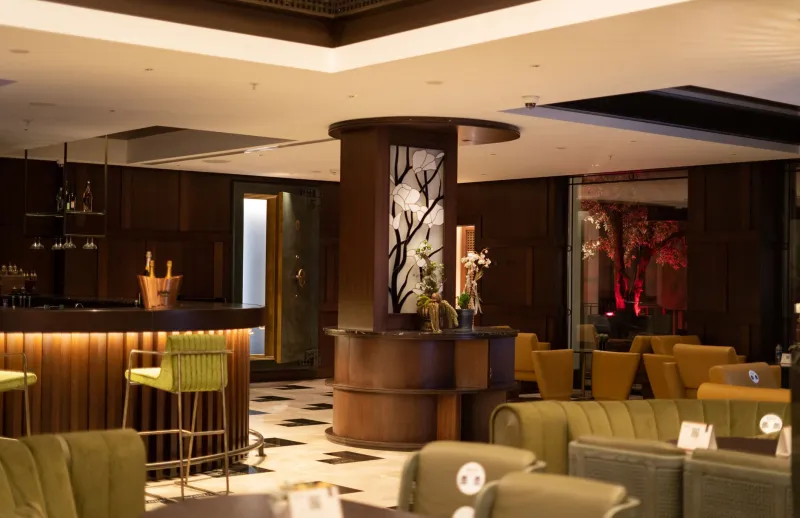
First late-night meets have a Goldilocks problem. A crowded club is too much. A dark corner booth is too much, too fast. A hotel lobby bar, oddly enough, lands closer to just right. It is public but not punishing, polished but not precious, and built for people who may want one more hour together or may want to call it a night without a scene.
That is the appeal for grown-ups navigating chemistry after dark in 2026. The lobby bar is not a shortcut to intimacy. It is a staging ground for finding out whether intimacy is even on the table. At Angel Hot Night, we like anything that makes consent easier to read and exits easier to take. This is the neutral-ground playbook.
Why the lobby bar earns its reputation
A good hotel lobby bar comes with built-in infrastructure. There are staff members nearby. There is traffic from the front desk, the elevator bank, the street door. There is lighting that lets you see a face instead of guessing at it. And there is no implied obligation to stay because you ordered a bottle or because the room is upstairs.
That last part matters. Hotel bars can blur the line between public and private, and that blur is exactly why the first meet should stay firmly on the public side. The lobby is the middle ground. The room is not. Keep the first encounter downstairs, in view, with a bartender who knows you are there and a door you can walk through alone.
Pick the right lobby, not just the nearest one
Not every hotel bar is neutral ground. Some are convention-floor chaos. Some are nightclub-adjacent and loud enough to turn flirting into shouting. Some feel like a wedding reception with better lighting. Look for a hotel bar with clear sightlines from the entrance, a visible host stand or service well, and enough seating that you are not forced into a dark back room.
Timing helps too. In most U.S. cities, the sweet spot for a first late-night meet is after the dinner rush but before the last-call crowd. Think 9 to 11 p.m. on a weeknight, or earlier on a Sunday. A Tuesday lobby bar in Austin or a Wednesday hotel lounge in Boston will usually beat a Saturday night in a downtown convention district. If a major event is in town, check the hotel calendar. You want ambient life, not a crush.
The seating calculus
Sit where you can talk without leaning into a whisper, but not so close to the service station that you are in the staff's way. A small two-top near the edge of the room is ideal. A 90-degree corner gives you conversation without the forced side-by-side setup of the bar rail. Deep booths can feel romantic, but on a first meet they can also feel like a trap if the energy drops.
You want a clear path to the exit and a clear view of staff. That is not paranoia. That is basic adult planning. If your date steers you toward an isolated corner before you have even ordered, treat that as information. You can say, 'I'd rather sit where I can see the room.' No apology needed.
Drink pacing is a consent tool
Order one round, then decide. Water on the table is not a mood killer; it is a pace keeper. You do not have to match your date drink for drink, and you should not feel odd ordering a zero-proof cocktail or a coffee. The point of the first meet is conversation, not a race to the bottom of a glass.
Food helps too. A plate of fries, a small plate, something shared and low-effort gives your hands something to do and your body a little more time to catch up with your feelings. If the conversation is good, you can extend. If it is not, you have not invested in a three-course evening.
Consent cues for a low-stakes room
A lobby bar is not a loophole around consent. It is a place to practice clear, ongoing signals. Ask before you move closer. Say what you are feeling instead of assuming your date can read it. 'I'm having a good time and I'd like to keep talking' is a useful sentence. So is 'I'm going to head out soon, but I'd like to text you tomorrow.'
Watch for the small stuff: whether your date turns toward you or away, whether they keep checking the exit, whether they answer in one word. Chemistry is not a debate. If you have to convince someone to stay, you have your answer. The lobby bar is supposed to make it easy to say yes and easy to say no. Protect that.
Use staff as quiet infrastructure
Hotel bar staff are not referees, but they are allies. Greet them. Let them see your face. If you feel uncomfortable, you can quietly ask the bartender to call you a car or walk you to the lobby door. If you need an interruption, a simple 'Can you check on that drink?' can buy you a moment. Tip well, be kind, and do not expect the staff to manage your date for you.
One useful move is to arrive separately and leave separately, at least on the first meet. It keeps the encounter clean. It also keeps the choice in both of your hands.
The clean-exit script
Ending well is a skill. If the meet has run its course, keep it warm and short. 'This was fun. I'm going to call it a night, but I'd like to text you tomorrow.' If you want to extend, move to a lobby sofa or a nearby coffee spot rather than upstairs. If you want to end, do not linger in the elevator bank. Say thank you, square up your tab, and go.
No one owes a second drink. No one owes a walk to the car. No one owes a tour of the room. The beauty of the lobby bar is that it gives you a built-in off-ramp. Use it without drama. A graceful exit is not rejection. It is good manners with a spine.
The short version
Choose a staffed, visible hotel bar. Sit where you can see the room. Order slowly. Say what you mean. Let staff be nearby. Keep the first meet downstairs. And leave while the night still feels good. That is the neutral-ground playbook for 2026: low stakes, clear signals, and an easy out that makes the whole evening feel more honest.