The Moving Room: Reading Late-Night Chemistry Between Stops
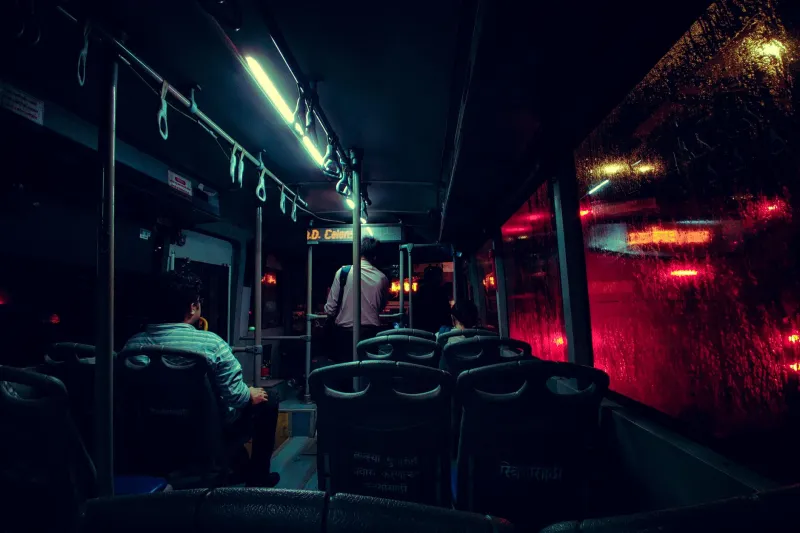
At 1:12 a.m., the bus doesn’t feel like a date. It feels like a moving room with fluorescent lighting, a loose handrail, and somebody asleep against the window. That’s exactly why it can be so revealing. A late-night ride together strips away the usual bar props—the booth, the bartender, the easy exit—and leaves you with a shared bench, a few stops, and whatever manners you both brought along.
This isn’t a pass-fail exam. It’s more like a low-stakes preview of how you handle small, shared discomforts. In US cities where the last train isn’t always convenient and the night bus is a fact of life, that preview can tell you a lot about chemistry, consent, and consideration.
Why the Ride Reads Different
A bar gives you atmosphere. A late-night bus gives you information. You see how someone boards, where they put their bag, whether they check the route, and how they speak to the driver. You notice if they take the aisle seat without asking or slide over to give you the window. You learn whether they can sit in a quiet lull without filling it with nervous chatter.
There’s also no stage lighting. Under those overhead lights, nobody looks like a promotional photo. That’s not a bad thing. Real attraction usually survives ordinary lighting. What it needs is a little room to breathe—and a moving bus offers exactly that, as long as you’re paying attention to the right signals.
The First Five Minutes: Space, Stance, Signals
Boarding is the first read. Do they let you choose where to sit? Do they ask before taking the seat beside you, or do they assume? A simple “Mind if I sit here?” is not old-fashioned. It’s a consent cue, and it matters in tight quarters.
Once you’re seated, watch the personal-space geometry. Bags go on laps or under seats, not sprawled across the aisle. Shoulders might brush when the bus turns, but a brush isn’t an invitation. If you want to close the gap, say so. “Is this okay?” works better than leaning in and hoping the motion explains it.
This is also where you notice whether someone is performing or simply present. A person who keeps one earbud out, lowers their voice, and checks that you’re comfortable is showing you something. A person who treats the ride as a private booth—loud, sprawling, oblivious—is showing you something too.
Small Considerations, Loud Signals
Late-night transit etiquette is made of tiny moves. Offering the window seat. Letting someone off before you board. Not blocking the doors. Keeping phone calls short and quiet. Switching seats if a fellow rider seems uncomfortable. None of these are grand romantic gestures, but together they suggest how someone treats people who aren’t trying to impress them.
Pay attention to how your date handles delays. A stalled train at 1:30 a.m. is a mild inconvenience, not a crisis. Do they joke about it, check the app, ask if you’re okay? Or do they get short with the driver, the crowd, or you? One bad moment doesn’t define a person, but a pattern of irritation does.
And notice how they talk about other riders—not in a performative way, just in passing. A cruel joke about a stranger’s clothes or a sleeping passenger can cool a warm evening fast. Consideration is attractive. Contempt is not.
The Motion Problem: Exhaustion Isn’t Electricity
Here’s where the night bus gets tricky. Motion, alcohol, and fatigue can imitate chemistry. A swaying train makes shoulders touch. A late hour makes people lean. A quiet car can feel intimate when it’s really just empty.
Don’t mistake a tired date’s closed eyes for longing. Don’t read a yawn as rejection, either. The useful question is not “Did they lean toward me?” but “Did they check in?” Did they ask if you were warm, cold, hungry, or ready to call it a night? Did they respect it when you said you were tired?
If the ride feels more confusing than clarifying, that’s data too. Real chemistry can survive a bumpy crosstown trip. It shouldn’t require you to decode every sway and silence.
Etiquette for the Moving Room
A few practical rules make the ride better for everyone. Ask before physical contact. Keep public affection modest and check that your date is comfortable—especially in a confined space where others are nearby. Share your location with a friend if you’re meeting someone new. Keep your phone charged. Know your exit before you need it.
Don’t rely on your date for your ride home. If you’re not feeling it, end the evening at a well-lit stop and take your own route. A polite “I’m going to head home from here” is complete. You don’t owe a full explanation to someone you met three hours ago.
If you are enjoying the ride, say so plainly. “This is nice” goes a long way. So does “Text me when you’re home.” These are small courtesies, but they’re also consent-forward. They keep the evening warm without assuming where it’s headed.
Reading the Arrival
At your stop, watch the goodbye. Do they walk you to the exit? Wait until your ride arrives? Offer a clear next step without pressure? A good goodbye is not about intensity. It’s about clarity. “I had a good time. Let’s do this again” is worth more than a dramatic kiss and a vague promise.
The night bus isn’t an oracle. It’s a moving room with limited data and unpredictable lighting. But it can show you how someone shares space, handles small frustrations, and treats people who aren’t auditioning for anything. That’s useful information. Take it, text your friend that you’re home safe, and let the next day’s messages tell you the rest.