The Fluorescent Filter: What a Twelve-Minute Corner-Store Stop Says About Your Late-Night Match
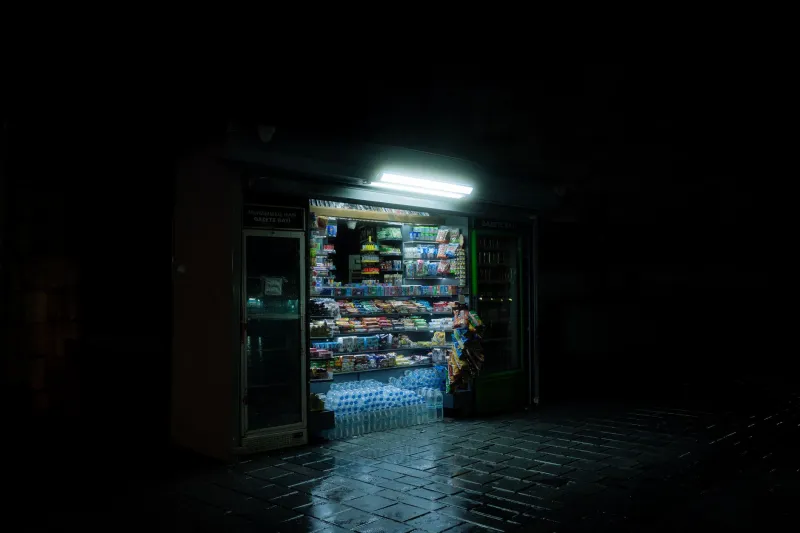
It is 1:12 a.m., the date is technically over, and someone says the words that either extend the night or quietly end it: “Want to stop at the corner store?” No mood lighting. No curated playlist. Just fluorescent glare, a wall of chips, and a cashier who has seen everything. Welcome to the most useful compatibility test in late-night dating.
The after-date corner-store stop—bodega, gas station, 24-hour market, whatever your city calls it—is not glamorous. That is the point. In about twelve minutes, you get a small, low-stakes preview of how someone makes decisions, handles minor inconvenience, treats people who are not trying to impress them, and respects a boundary when the night is winding down. On Angel Hot Night, we are all for sultry chemistry. We are also all for reading the room under ugly lighting.
Why the Bodega Beats the Bar for Reading Chemistry
Bars are designed to blur edges. Corner stores are designed to expose them. The lights are bright, the aisles are narrow, and the decisions are mundane: salty or sweet, cash or card, eat here or take it home. There is no bartender to charm and no dim corner to hide in. You simply get to watch how your date moves through a small public space at an hour when nobody is performing their best self.
That does not mean you should audit every move like a detective. It means you should notice the pattern. Do they ask what you want before grabbing one bag of chips for themselves? Do they hold the door, or let it swing? Do they get impatient when the card reader takes an extra second? Small courtesies are not small when they are repeated.
The Snack Aisle Is a Personality Test, Sort Of
Let us be clear: there is no morally superior late-night snack. If someone wants neon cheese puffs and a giant iced tea, that is not a red flag. The interesting part is not what they choose. It is how they choose it.
A decisive person might grab a water and a bag of pretzels in eight seconds. An anxious decision-maker might circle the aisle twice. Someone generous might ask, “Do you want anything?” before they get to the register. Someone scattered might buy three things they do not need and forget the one thing they came for. None of this is destiny, but it is information.
Watch for whether they include you in the stop. Do they ask if you are hungry, or assume you are fine? Do they offer to share, or make a joke about guarding their snacks? Playfulness is great. Possessiveness over a $2 bag of gummy worms at 1 a.m. is a data point.
How They Treat the Cashier Is the Whole Story
The cashier is the real test. Not because you should interrogate them or expect a performance, but because this is a person your date has no romantic reason to impress. Do they say please and thank you? Do they make eye contact, or at least acknowledge the human scanning their items? Do they complain about the total, the card machine, or the store policy while the clerk is just trying to get through the shift?
People who are rude to service workers on a good night are telling you something. It may not be the whole story—everyone has bad days—but it is a chapter. On the flip side, casual kindness under fluorescent lights is quietly attractive. It suggests your date can be decent when the audience is not a romantic one. That matters more than a smooth line at last call.
Twelve Minutes, Three Decisions
Most corner-store stops come down to three tiny decisions: what to buy, who pays, and what happens next. Each one is a chance to practice easy, consensual communication.
On paying: offer to split, offer to cover, or accept graciously if they offer. Do not turn a $6 transaction into a power struggle. “I’ve got this—you can get the next one” is a perfectly charming move, as long as there is no pressure behind it.
On what happens next: this is where the stop can get fuzzy. Some people use the corner store as a soft launch for an invitation home. That is fine if it is mutual. It is not fine if the stop becomes a trap. Ask directly, keep it light, and make the exit easy. “I’m going to head home after this. Can I walk you to your car?” is a lot more respectful than hovering by the door hoping they will suggest something.
Fluorescent-Light Consent and Safety
A well-lit public store is actually a decent place to check in with yourself. Are you still comfortable? Do you want to extend the night, or are you ready to close it out? You do not owe anyone a prolonged goodbye because they bought you a soda.
Keep the same late-night basics you would use anywhere: stay aware of your surroundings, do not leave your drink unattended, share your location with a friend if you are meeting someone new, and trust the small drop in your stomach if something feels off. The cashier is not your chaperone, and a bodega is not a safety guarantee—but a public, bright stop is usually a better setting for a clear-headed decision than a dark parking lot.
And if you are the one inviting the stop, watch for enthusiastic yes energy. “Sure, quick stop” is different from “I should probably get home.” Make it easy for them to decline. The best late-night chemistry includes the freedom to leave.
The Graceful Wrap
A great corner-store cameo ends cleanly. Eat your snack outside if the night is mild, laugh about the absurdity of the lights, and then say what you mean. “This was fun. Get home safe” is not a cold ending; it is a respectful one. If you want to see them again, say so without turning the sidewalk into a negotiation. If you do not, keep it kind and keep it moving.
In 2026, dating advice loves grand gestures. But compatibility often shows up in the unglamorous middle: the shared bag of chips, the please and thank you, the easy exit, the text the next day that does not demand a response. Twelve minutes under fluorescent lights will not tell you everything. It will tell you enough to make a better next move.