The Last-Call Read: What Bar Staff Notice About Your 1 A.M. Chemistry
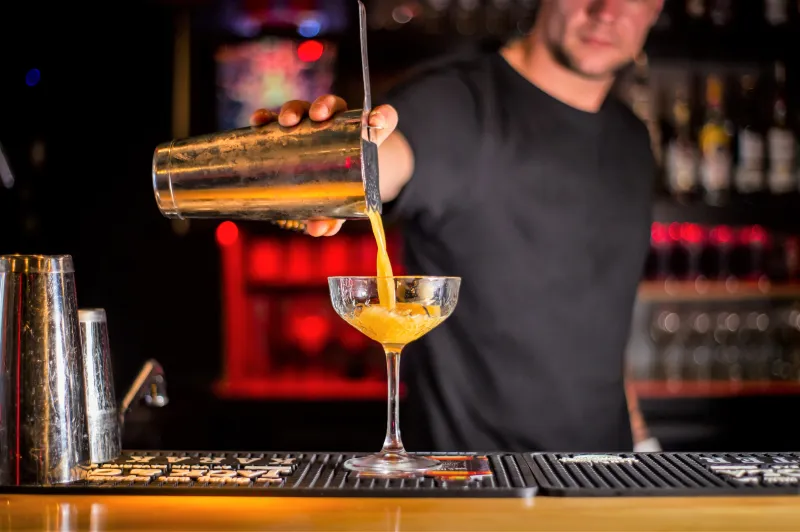
Photo: bartender observing patrons in a dim late-night bar, candid documentary style, warm lighting, via static.whereyat.com
At 1:15 a.m., a good bartender is doing six things at once: pouring, counting, listening, watching the door, wiping the same three inches of mahogany, and reading the room. That last job never stops. Service staff are not surveillance cameras, and they are not referees. But they do notice patterns—especially the small signals that tell them whether two people are actually hitting it off or one person is working very hard to make it look that way.
For anyone flirting after dark, that read is useful. Not because you need a bartender's approval, but because the same cues staff pick up on are the ones that separate easy chemistry from a night that feels off. We spoke with bartenders, servers, and door staff in several U.S. cities—Chicago, Austin, Philadelphia, Seattle—about what they see between 11 p.m. and last call. Their answers were refreshingly unromantic and very practical.
The first thing staff notice is not the pickup line
It is listening. A bartender can usually tell within a few minutes whether two people are having a conversation or two monologues sharing a barstool. The signals are small: one person asks a follow-up question and waits for the answer. A phone stays face-down. A drink gets paused mid-sip because the story is actually good. Bodies angle toward each other without anyone climbing into a lap.
Staff also notice who asks before sitting down. Who checks whether the seat is taken. Who waits for an answer instead of treating a shrug as a welcome mat. 'A real yes usually sounds like a sentence,' one Chicago bartender told us. 'A maybe sounds like a maybe. People hear what they want to hear.'
Consent cues show up in hands and space
Service staff watch physical boundaries because they have to. Are hands visible on the bar? Is one person closing the gap while the other keeps leaning back? Does someone touch a shoulder and then check the other person's face? A no is not always a speech. Sometimes it is a torso turning away, a short answer, a phone check, or eyes scanning the exit.
Bartenders say most problems start when someone treats a polite laugh as a green light. The fix is not complicated. Ask before touch. 'Is this okay?' is not a mood killer; it is a clarity upgrade. If you are on the receiving end, use words and move your body. If you need help, tell staff plainly: 'That person is making me uncomfortable. Can you help me get a cab?' Good bars train for that. Good patrons make it easier by speaking up early.
The drink-order test
Watch how someone handles the bar. Do they order for the other person without asking? Do they hover while the drink is made? Do they keep pushing another round after a no? Staff notice all of it. Buying a drink can be a friendly gesture, but it is not a shortcut to closeness. If you are early in the conversation, split the first round or ask first: 'Can I get you another, or are you good?'
Staff also track pace. Water, food, and a slower drink order are good signs. So is someone who notices when the other person has had enough. If a person is too drunk to consent, there is no chemistry to read—there is a situation to stop. Bartenders are trained to cut people off, but they are not there to babysit your date. Keep your own check on the room.
Door staff see the entrance and the exit
Door staff notice who arrives together and who hangs back. They notice who blocks a doorway, who follows someone outside without being invited, and who suddenly needs a cab at 1:50 a.m. A smooth exit is not just good manners; it is part of consent. Enthusiasm should continue on the sidewalk, not evaporate there.
If you are leaving with someone, make the plan explicit. 'I am heading out—want to share a ride?' is different from 'I will walk you.' If you are not leaving with someone, say so clearly and make room for the other person to do the same. Staff would much rather call a cab than clean up a bad scene.
The performance problem
Big gestures, loud stories, buying rounds for the whole bar, snapping at the server—staff see the audition. It usually looks less like charm and more like a person who needs an audience. It also tends to crowd the room, which makes the other person feel trapped and everyone nearby feel like they are sitting inside a one-man show.
Lower the volume. Ask questions. Keep your hands to yourself until invited. The bar is a shared living room, not a stage. Chemistry that requires an audience is usually not chemistry; it is a performance with a bar tab.
What a good last-call read looks like
A solid late-night read usually includes a few boring details. The couple is sitting at an angle, not cornering each other. There is water on the bar. Phones are mostly down. Someone asks before touching. When the conversation dips, nobody panics. At close, they leave together only after a clear yes—or they leave separately without drama.
Staff also notice how you treat them. Please and thank you. Patience at a busy moment. A calm response when the bar is out of something. It is not a compatibility test on its own, but it tells you a lot about how someone handles small disappointments and other people's boundaries.
Use the read without outsourcing your judgment
Bartenders are witnesses with a busy job, not psychics. Do not ask them to tell you whether someone is into you. Ask yourself better questions: Am I listening? Am I being listened to? Do I have an exit? Do I feel more relaxed or more trapped as the night goes on?
The best late-night chemistry is not the most dramatic. It is the most legible. It looks like people who can see each other, hear each other, and leave room for a no. Keep your signals bright enough to read, and everyone gets home with a story worth telling—for the right reasons.