Bright Lights, Better Signals: Why Loud Bars Make Late-Night Flirting More Honest
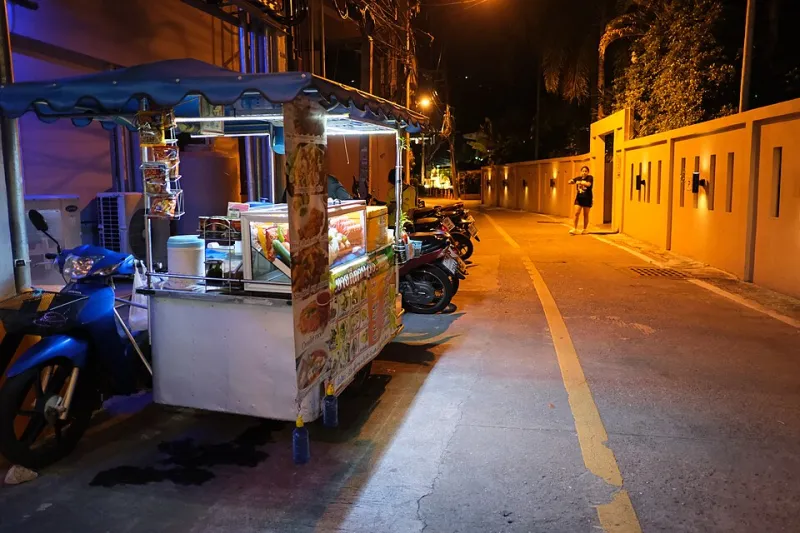
Photo: PattayaPatrol, CC BY-SA 4.0, via Wikimedia Commons
We have spent a decade romanticizing the low-lit bar. Candle on the table, hidden door in the back of a taco shop, playlist just quiet enough to feel like a secret. It photographs beautifully. It also, at 1 a.m., can be terrible for reading another person.
This is not an attack on speakeasies. A dim room can be lovely when you already know someone, or when the point is a quiet drink and not a conversation with a stranger. But as a default setting for late-night flirtation, low light gets too much credit. Bright, loud, slightly unglamorous bars often make the night more honest—because they make the signals easier to see.
The seduction of the dim room—and its blind spots
Low light reduces visual information. Facial expressions get fuzzy. Body language turns into shadow. Who is approaching whom? Is that smile genuine or polite? Is the person in the booth leaning in because they are interested, or because the music is so loud that they cannot hear otherwise?
Whispery rooms also create a weird kind of pressure. You have to lean close to talk. That can feel intimate, but it can also push past the normal spacing that lets two people figure out whether they actually like each other. Tight booths with one exit are romantic in movies and claustrophobic in real life. If one person wants to leave, the whole room knows.
None of this is automatically unsafe. But it is less legible. And consent cues are often small: a slight lean back, a shorter answer, a glance toward the door. A room that hides those cues is not doing anyone a favor.
What brightness buys you
A well-lit bar lets you see what you are doing. Not surgical-bright, not a dentist's office—just bright enough to catch a micro-expression, see where someone's hands are, and notice whether they are turning toward you or away. That is not unromantic. That is information.
A loud-but-not-deafening bar has a similar effect. Music at a level where you have to lean in and raise your voice forces actual words. You cannot coast on a mysterious gaze. You have to say something, hear the answer, and try again. That is better than guesswork. It is also easier for staff to see the room and easier for you to spot the exits.
And there is the gift of unpretentiousness. A neighborhood tavern with fluorescent lights and a jukebox does not ask you to perform. It does not sell mystery by the bottle. It sells cold beer, decent wings, and a place to sit. People act more like themselves in rooms that are not trying to be a mood board.
The honest conversation checklist for choosing a 2026 late-night venue
Use this before you commit to a bar for a first meet or a late-night date. It is not about finding the perfect room. It is about choosing one that supports your judgment instead of fogging it.
- Lighting: Can you see faces and hands? If you have to squint to read a menu, you will miss more than the specials.
- Sound: Can you talk at a raised voice without losing your voice? If every sentence is 'WHAT?', you are not flirting; you are charades.
- Seating: Look for angle seating, movable stools, and space to step away. Booths with one exit create pressure.
- Sightlines: Can staff see most of the room? Can you see the door? Visibility is a safety feature, not just a design choice.
- Exit access: Is the path out clear? Is the street well lit? Is there a ride-share pickup that does not require walking through an unlit alley?
- Staff presence: A visible host, bartender, or door person matters. So does a staff that is not so overwhelmed that no one can help.
- Menu: Water, food, and nonalcoholic options are not buzzkills. They are pacing tools.
- Bathrooms: Safe, well lit, and not at the end of a long isolated hallway.
- Vibe: Friendly and mixed beats exclusive and tense. You want a room where people are not performing for a velvet rope.
- Transit: Know how you are getting home before last call, not after.
Why the 'ugly' bar often wins
A slightly ugly bar is honest. It does not pretend the lighting is flattering. It does not hide the fact that people are drinking and shouting and trying to make eye contact. It puts the whole awkward, human project of late-night flirtation on display, and that is actually a relief.
In U.S. cities in 2026, that might mean a neighborhood tavern in Chicago, a honky-tonk in Nashville with the lights up, an Austin patio with string lights instead of darkness, a Denver sports bar after the game, a Philadelphia corner bar where the regulars have opinions, or a Seattle tiki spot with bright lamps and a friendly bartender. These places are not necessarily stylish. They are legible.
Red flags a dim venue can hide
A dark room is not guilty until proven otherwise. But pay attention when several of these stack up:
- You cannot see who is behind you.
- The booths have one exit and no staff sightline.
- The music is too loud to talk, but there is no dance floor.
- Bottle service creates pressure and no one is serving water.
- The exit is poorly lit or the hallway to the bathroom is isolated.
- Staff cannot see the room well enough to intervene.
Any one of these can be fine. Several together are a reason to take your chemistry somewhere else.
How to flirt in a bright room
Use words. 'I noticed you from across the bar' is still a perfectly good opener. Ask an open question and listen to the answer. Check in: 'You good?' Watch the face, not just the smile. Keep touch minimal until you hear a yes. Use the bar as a meeting place, not a destination. Have an exit plan that does not depend on the other person.
And do not mistake brightness for a lack of romance. Eye contact is more romantic when you can actually see the eyes. A clear yes is more exciting than a mysterious maybe. A room that lets you read the signals is a room that lets you relax enough to flirt well.
The 2026 late-night scene does not need more mystery. It needs more legibility. Choose bars where you can see a no, hear a yes, and leave without making a scene. That is not unglamorous. That is grown-up.